Sprinkler and Irrigation Services
For property owners throughout Lake Mary, Winter Park, Maitland, and surrounding Orlando Florida communities, properly designed sprinkler and irrigation systems play a critical role in maintaining healthy landscapes, managing water efficiently, and protecting long-term property value. These systems operate as connected networks of controllers, valves, zones, piping, sprinkler heads, and other water-delivery components that must work together to provide dependable coverage across a property.
As landscapes mature and watering needs change, an existing system may require maintenance, targeted repairs, efficiency improvements, component upgrades, or eventual replacement. New construction and major landscape improvements may instead call for a professionally planned irrigation installation designed around the property’s layout, soil conditions, drainage characteristics, and long-term watering requirements.
Quality Services provides comprehensive sprinkler and irrigation services informed by decades of experience working in local Central Florida conditions. Below, you’ll find an overview of our Sprinkler Services, focused on diagnosing, repairing, and improving existing systems, and our Irrigation Services, centered on new installations, system upgrades, and long-term performance.
Sprinkler Services
Our sprinkler services focus on diagnosing and repairing existing irrigation systems to restore proper coverage, efficiency, and reliability. Serving Lake Mary, Winter Park, Maitland, and surrounding Orlando-area communities, we address common issues such as leaks, pressure problems, stuck valves, and uneven water distribution.
Sprinkler Services Include:
- Troubleshooting zones, valves, and controls
- Repairing leaks and damaged lines
- Replacing and adjusting heads and nozzles
- Correcting pressure and coverage issues
Call 407-314-9852 today to diagnose and resolve sprinkler system issues before they lead to larger repairs or water waste.
Irrigation Services
From new construction to landscape renovations, our team designs irrigation layouts that account for soil conditions, plant types, zoning requirements, and local water regulations. Each system is planned to deliver consistent coverage while minimizing runoff, overspray, and unnecessary water waste. Learn more about system design and layout planning on our irrigation installation page.
Irrigation Services Include:
- New irrigation system design and installation
- System upgrades and expansions
- Smart irrigation controller installation
- Zoning and layout optimization
- Irrigation efficiency planning and water management
Sprinkler and Irrigation System Lifespan in Lake Mary and the Orlando Florida Area
Sprinkler and irrigation systems are designed to operate reliably for many years when properly maintained. While individual components such as heads, valves, and controllers may require periodic replacement, the overall system can continue performing effectively for 10–20 years or more.
In Lake Mary, Winter Park, Maitland, and surrounding Orlando-area communities, factors such as sandy soil conditions, root intrusion, water quality, and year-round system usage all influence system longevity. Over time, normal wear can affect pressure consistency, coverage patterns, and system efficiency.
A system that receives regular inspection and timely repairs will typically perform significantly longer than one that is left unmaintained, even if both systems were originally installed to the same standard.
How Often Irrigation Systems Should Be Serviced
Irrigation systems benefit from routine evaluation to maintain proper performance and water efficiency. In most cases, systems should be inspected at least once or twice per year, with additional adjustments made as seasonal conditions change.
Regular service includes checking sprinkler head alignment, verifying pressure levels, identifying leaks, and confirming that each zone is delivering consistent coverage. Without maintenance, minor issues such as misaligned heads or pressure inconsistencies can lead to uneven watering, dry spots, and unnecessary water usage.
Understanding how often a system should be serviced also helps determine whether repairs will restore performance or if upgrades are more appropriate for long-term reliability.
Sprinkler Systems vs Drip Irrigation in Lake Mary Landscapes
Sprinkler systems and drip irrigation are designed to serve different landscape needs. Sprinkler systems provide broad, even coverage and are typically used for lawns and open turf areas where consistent distribution is required.
Drip irrigation systems deliver water directly to plant root zones through controlled emitters, reducing evaporation and improving efficiency in planting beds and landscaped areas. This approach is especially effective in areas where targeted watering is needed.
Many properties in Lake Mary, Winter Park, and Maitland use a combination of both systems, with sprinklers handling turf areas and drip irrigation supporting shrubs, trees, and landscaped zones where precision is more important than coverage.
What Affects Sprinkler and Irrigation Repair Costs
The cost of sprinkler and irrigation repair depends on the type of issue, the size of the system, and the accessibility of the affected components. Common factors include broken sprinkler heads, underground leaks, valve malfunctions, and controller issues.
Some repairs involve straightforward component replacement, while others require more detailed troubleshooting to identify pressure imbalances or coverage inconsistencies across multiple zones. Because irrigation systems function as interconnected networks, identifying the underlying issue is essential before determining the appropriate repair approach.
In situations where multiple issues are present across the system, evaluating whether targeted repairs or broader system upgrades are more effective can help avoid repeated service calls and improve long-term performance.
Common Sprinkler and Irrigation System Problems
Over time, irrigation systems can develop performance issues that affect both coverage and efficiency. Common problems include low water pressure, uneven distribution, leaking lines, clogged sprinkler heads, and zones that fail to activate properly.
In Lake Mary and surrounding Orlando-area communities, environmental factors such as shifting soil, root growth, and mineral buildup can contribute to these issues. These conditions may cause certain areas of a property to receive too much water while others remain dry.
Issues such as zones that continue running, inconsistent pressure, or debris affecting system components are often related to valve performance, filtration needs, or controller settings. Identifying the root cause before making adjustments is essential to restoring proper system function.
Understanding How Residential Irrigation Systems Work
During each watering cycle, the controller activates one zone at a time, opening the corresponding valve and sending water through the underground piping to the sprinkler heads or emitters assigned to that area. The system’s overall performance depends on how accurately these components are coordinated, because a weakness in one part of the network can affect pressure, coverage, and watering results elsewhere on the property.
The Controller Sets the Watering Schedule
The controller serves as the operating center of the system. It stores the watering days, start times, and run times assigned to each zone. Traditional controllers follow fixed schedules, while newer smart controllers can make adjustments based on rainfall, seasonal conditions, or changing landscape demands.
A properly programmed controller should provide enough water to support the landscape without running zones longer or more often than necessary. The schedule may need to change as temperatures rise, rainfall patterns shift, plants mature, or shaded areas begin requiring less water than exposed sections of the property.
Valves Direct Water to Individual Zones
Most residential systems divide the property into separate watering zones. An irrigation valve opens when it receives an electrical signal from the controller, allowing water to move into the piping assigned to that zone. Once the scheduled run time ends, the valve closes and the controller activates the next zone.
Dividing a property into zones allows different areas to receive watering based on their individual needs. Turf, planting beds, narrow side yards, shaded areas, and sections exposed to full sun may all require different watering methods or run times.
Mainlines and Lateral Lines Carry Water Through the Property
The mainline is the pressurized pipe that supplies water to the irrigation valves. From there, lateral lines carry water from each valve to the sprinkler heads or emitters within its assigned zone.
Because most of this piping is underground, homeowners rarely see how extensive the network is. A single zone may include several branches of lateral piping serving heads positioned throughout the lawn or landscape beds. Changes to the property, including new planting areas, hardscapes, tree roots, or landscape renovations, can affect how well the original piping layout continues to serve the site.
Sprinkler Heads and Emitters Deliver Water
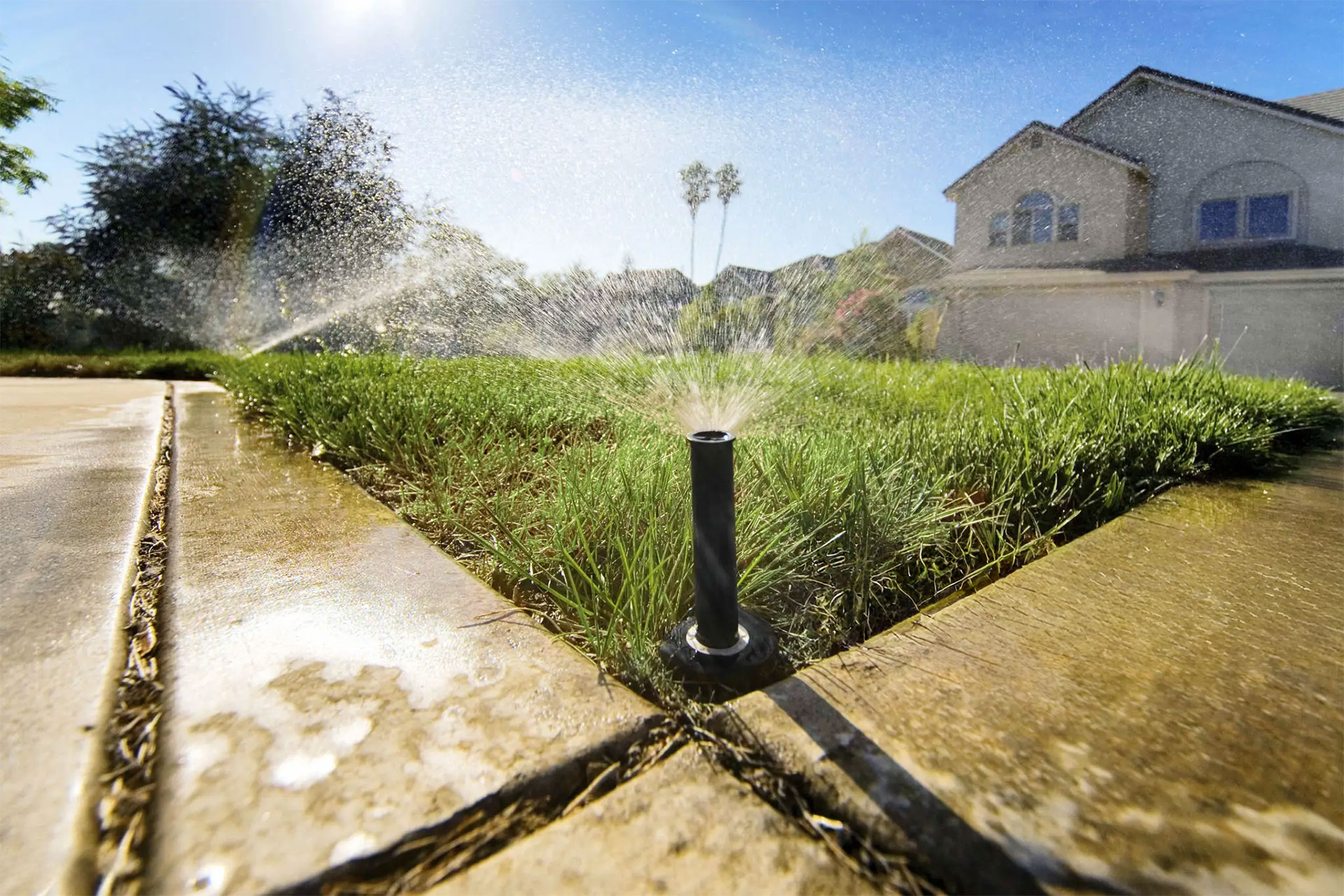
Sprinkler heads are selected according to the size, shape, and watering needs of the area they serve. Spray heads typically cover smaller areas with a fixed pattern, while rotary heads distribute water over larger sections. Dripline and individual emitters deliver water more slowly and directly around plants, shrubs, or trees.
The type of water-delivery component matters because different heads apply water at different rates. Mixing incompatible sprinkler types within the same zone can cause one area to receive too much water while another remains dry, even when every component appears to be operating.
Pressure Influences the Entire System
Water pressure affects how valves open, how sprinkler heads rise, how far water travels, and how evenly each zone performs. Pressure that is too low may prevent heads from reaching their intended coverage. Excessive pressure can create misting, overspray, uneven distribution, and unnecessary wear on system components.
Pressure can also vary from one zone to another depending on pipe size, elevation, the number of operating heads, and the water demands placed on that section of the system. For that reason, visible symptoms at a sprinkler head do not always identify the underlying cause.
Coverage Depends on More Than Sprinkler Placement
Effective irrigation coverage relies on neighboring sprinkler heads overlapping their watering patterns. This is commonly referred to as head-to-head coverage. Without adequate overlap, dry areas can develop between sprinklers even when each individual head appears to be functioning normally.
Coverage can change over time as plants grow, shrubs block spray patterns, soil settles, or sprinkler heads become tilted or buried. Routine observation helps identify these gradual changes before they begin affecting turf health or landscape performance.
Scheduling Brings the Components Together
Even a well-designed system can waste water or produce poor results when the watering schedule does not match the landscape. Run times should account for the type of sprinkler head, soil absorption, sun exposure, plant needs, rainfall, and the time required for water to reach the root zone without creating runoff.
Understanding how the controller, valves, zones, piping, pressure, and sprinkler heads work together makes it easier to recognize when a system needs adjustment. Some performance issues can be corrected through scheduling or coverage changes, while damaged components and persistent operational problems may require professional sprinkler repair. Properties undergoing major landscape changes may instead benefit from an updated layout or a professionally planned irrigation installation that better reflects their current watering needs.
Improving Irrigation Efficiency Over Time
Once homeowners understand how the major components work together, the next consideration is how well the system continues to serve the property as conditions change. Irrigation efficiency is not fixed at the time a system is installed. It can gradually improve or decline depending on equipment age, controller settings, water pressure, landscape growth, seasonal weather, and how regularly performance is evaluated.
Aging Systems May No Longer Match the Property
An irrigation system can remain operational for many years while becoming less efficient over time. Sprinkler heads may no longer align with mature planting areas, older zones may water spaces that have been redesigned, and components installed at different times may apply water at inconsistent rates.
These changes do not always result in an obvious system failure. Instead, homeowners may notice longer watering times, recurring dry areas, excess runoff, or higher water use without a clear explanation. Reviewing how the entire system now serves the property can reveal opportunities to improve performance without treating every concern as an isolated problem.
Controller Technology Can Improve Watering Decisions
Older controllers typically operate according to fixed days and run times unless a homeowner manually changes the program. Newer controllers may support multiple seasonal programs, rain sensors, soil-moisture inputs, weather-based adjustments, or remote access through a mobile device.
More advanced technology is useful only when it is programmed around the actual landscape. A smart controller cannot compensate for unsuitable zone run times, mismatched sprinkler heads, poor coverage, or watering restrictions that have not been entered correctly. The controller should support informed watering decisions rather than simply automate an inefficient schedule.
Watering Schedules Should Change with Landscape Needs
The schedule that supports a property during hot, dry weather may apply too much water during cooler or wetter periods. Turf, shrubs, trees, planting beds, and shaded areas also respond differently to changes in temperature, rainfall, and daylight.
Seasonal adjustments allow homeowners to reduce unnecessary watering without abandoning a schedule that otherwise works well. Changes should be based on how the soil absorbs water and how the landscape responds, rather than extending every zone by the same amount.
- Reduce watering when rainfall is consistently meeting landscape needs.
- Adjust run times when runoff begins before a zone completes its cycle.
- Review shaded and full-sun areas separately.
- Account for mature plants that may require different watering than newly established landscaping.
- Confirm that seasonal changes comply with current local watering requirements.
Pressure Regulation Supports Consistent Distribution
Appropriate water pressure helps sprinkler heads operate within their intended range. Excessive pressure can produce misting and overspray, allowing water to drift away from the target area. Insufficient pressure can shorten spray distance and reduce the overlap needed for even coverage.
Pressure regulation should be considered as part of whole-system performance because the effects may appear differently from one zone to another. The goal is not simply to increase or decrease pressure, but to maintain conditions that allow each type of sprinkler head or emitter to distribute water as intended.
Water Conservation Begins with Useful Watering
Efficient irrigation is not defined only by reducing the number of watering minutes. Water is conserved when the system delivers an appropriate amount to the intended root zone with minimal runoff, evaporation, overspray, or unnecessary repetition.
Shorter watering cycles may be useful where soil absorbs water slowly. Different start times may reduce evaporation or interference from wind. Adjusting spray patterns can keep water away from sidewalks, driveways, and structures. These individual improvements become more effective when they are coordinated across the complete system.
System Evaluations Help Guide Long-Term Improvements
Periodic system evaluations provide a broader view than observing whether each zone turns on. A useful evaluation considers controller programming, zone performance, pressure, sprinkler type, coverage, runoff, landscape changes, and whether the system still reflects the way the property is used.
This whole-property perspective helps distinguish between adjustments that improve efficiency now and larger changes that may be appropriate later. By evaluating performance over time, homeowners can make informed decisions that support healthier landscapes, more consistent coverage, and responsible water use without waiting for the system to stop working.
When Is It Time To Upgrade Rather Than Repair?
As an irrigation system ages, the decision is not always whether a single component can be fixed. The more important question is whether the system still supports the property efficiently, reliably, and in a way that makes sense for long-term ownership.
A targeted repair may be appropriate when the rest of the system is performing well. An upgrade becomes more reasonable when recurring problems, outdated controls, inefficient watering patterns, or major landscape changes indicate that the system is no longer keeping pace with the property.
Frequent Service Needs Can Signal a Larger Pattern
Occasional maintenance is a normal part of irrigation system ownership. Repeated service calls across different zones or components may point to broader age-related decline rather than a single isolated issue.
When valves, wiring, sprinkler heads, piping, and controller settings require attention at different times, homeowners may begin spending more effort maintaining the existing arrangement than improving its overall performance. At that point, evaluating the system as a whole can provide a clearer picture than addressing each symptom separately.
Older Technology May Limit Efficiency
A controller can remain functional while offering limited flexibility for seasonal adjustments, rain response, multiple watering programs, or changing landscape needs. Older components may also operate at pressure levels or application rates that make efficient scheduling more difficult.
Upgrading does not necessarily mean replacing every part of the system. In some cases, updating the controller, improving pressure regulation, separating incompatible watering methods, or replacing outdated sprinkler types can meaningfully improve performance while preserving components that still work well.
Landscape Changes Can Outgrow the Original System
Irrigation systems are planned around the property as it exists at a particular time. Years later, trees may create larger shaded areas, planting beds may expand, turf may be replaced, and hardscapes may alter the original watering layout.
A system that once provided balanced coverage may begin watering areas that no longer need it while failing to meet the needs of newer landscape features. When the property has changed substantially, upgrading selected zones or reorganizing water delivery may be more practical than repeatedly adjusting the original layout.
Water Use Should Be Considered Alongside Reliability
A system can operate consistently and still use more water than necessary. Overspray, misting, excessive run times, mismatched sprinkler heads, and outdated scheduling practices may continue for years without creating an obvious failure.
Long-term ownership decisions should therefore consider both reliability and water use. A system that requires constant monitoring to prevent runoff or uneven watering may benefit from improvements that make efficient operation easier to maintain.
Partial Upgrades May Be More Appropriate Than Full Replacement
Not every aging irrigation system requires complete replacement. Many properties benefit from phased improvements that address the areas with the greatest effect on performance.
- Updating an older controller to support more accurate scheduling.
- Improving pressure regulation in zones affected by misting or weak coverage.
- Separating sprinkler heads and drip irrigation that apply water at different rates.
- Reconfiguring zones after major landscape or hardscape changes.
- Replacing groups of outdated components instead of continuing isolated repairs.
A phased approach allows homeowners to improve efficiency and reliability while making use of system components that still have practical service life.
A System Evaluation Can Clarify the Best Next Step
The decision to upgrade should be based on the condition and performance of the complete system rather than its age alone. A useful evaluation considers recurring service history, controller capability, pressure, coverage, water use, landscape changes, and the remaining value of existing components.
When the system is still fundamentally sound, targeted sprinkler repair may remain the most practical choice. When the property or watering requirements have changed beyond what the current layout can reasonably support, broader system improvements can provide a more dependable foundation for future ownership.
Components Found in Most Residential Irrigation Systems
The earlier sections explain how water moves through an irrigation system and how the major parts work together during a watering cycle. The following component reference adds detail to the individual parts homeowners are most likely to encounter when reviewing, maintaining, or planning long-term improvements to a residential system.
Irrigation Controller
The controller stores the watering schedule and sends low-voltage signals to the valves assigned to each zone. Depending on the model, it may support multiple programs, seasonal adjustments, rain-delay settings, sensor connections, or weather-based scheduling.
System Shutoff Valve
A dedicated shutoff valve allows water to the irrigation system to be stopped without necessarily interrupting water service to the home. Homeowners should know where this valve is located before an urgent problem occurs.
Backflow Prevention Device
A backflow prevention device helps keep irrigation water from reversing direction and entering the potable water supply. Its type, location, and testing requirements may vary according to the water source and local regulations.
Mainline
The mainline is the primary underground pipe carrying pressurized water from the supply connection to the irrigation valves. Unlike most lateral piping, it may remain under pressure even when no zone is running.
Irrigation Valves
Each irrigation valve controls water entering a specific zone. Most residential valves contain a solenoid, diaphragm, spring, and internal passages that respond to signals from the controller.
Because one valve may control many sprinkler heads, a valve problem can affect an entire section of the property. An irrigation valve that remains open may keep the whole zone running after the controller has completed its cycle.
Valve Boxes
Valve boxes provide below-ground access to one or more irrigation valves while helping protect them from direct soil contact and landscape activity. Their lids are usually installed near grade, although mulch, turf, roots, and soil movement can make them difficult to locate over time.
Zones
A zone is the group of sprinklers or emitters operated by the same valve. Zones allow the property to be watered in sections and can separate areas with different plant types, sun exposure, soil conditions, or application methods.
Lateral Lines
Lateral lines carry water from a valve to the sprinklers or emitters within its zone. These pipes are normally pressurized only while that zone is operating.
Sprinkler Bodies
The sprinkler body is the below-ground housing that supports the internal stem and nozzle. Its position, height, and alignment influence whether the water pattern clears nearby turf and plants.
Risers
A riser connects a sprinkler head or other outlet to the underground piping. Risers may be fixed, flexible, or incorporated into a pop-up sprinkler assembly, depending on the application.
Spray Nozzles
A spray nozzle distributes water in a fixed pattern and is commonly used in smaller turf areas, narrow spaces, and planting zones. Nozzle patterns may cover full circles, partial arcs, strips, or other defined shapes.
Rotary Nozzles
Rotary nozzles produce multiple rotating streams and generally apply water more slowly than conventional fixed spray nozzles. They are often used where slower application or longer throw distances are beneficial.
Rotors
Rotors are larger sprinkler heads commonly used across broader turf areas. They rotate through an adjustable arc and may accept different nozzles to change flow rate and watering distance.
Dripline
Dripline is flexible tubing containing emitters spaced at regular intervals. It delivers water gradually along planting beds, hedges, and other areas where low-volume watering is appropriate.
Individual Emitters
Individual emitters release water at specific points near selected plants. Their flow rates can differ, allowing watering to be adjusted for plant size and location when the system is designed and maintained correctly.
Pressure Regulators
Pressure regulators reduce incoming pressure to a level that better matches the requirements of certain sprinklers, nozzles, or drip components. Regulation may serve an entire zone or a smaller section of the system.
Filters
Filters capture debris before it reaches narrow nozzle openings, dripline passages, or individual emitters. They are especially important in low-volume irrigation, where small particles can restrict water flow.
Solenoids
A solenoid is the electrical component mounted on an irrigation valve. When energized by the controller, it helps initiate the valve’s opening process.
Control Wiring
Low-voltage wiring connects the controller to the valve solenoids. Most systems use a common wire shared by the valves along with separate station wires assigned to individual zones.
Rain Sensors
A rain sensor can interrupt scheduled watering after sufficient rainfall. It helps prevent unnecessary operation but still depends on correct placement, wiring, controller settings, and routine testing.
Weather-Based Controls
Weather-based controllers or add-on devices can adjust watering according to conditions such as temperature, rainfall, solar exposure, and seasonal demand. These controls improve scheduling flexibility but do not correct poor coverage, incompatible components, or an unsuitable zone layout.
Understanding these components makes it easier to identify what part of the system is being discussed during an evaluation and whether a concern involves water supply, control, pressure, distribution, or scheduling.
Additional Information On Our Sprinkler Services:
Quality Services works with all major sprinkler components, including control valves, zones, heads, and nozzles, identifying problems such as leaks, pressure loss, stuck valves, and uneven distribution. Sprinkler repairs are performed with long-term reliability in mind, using proven components and installation practices appropriate for Lake Mary and surrounding Orlando-area communities. These issues, when left uncorrected, can lead to inconsistent coverage, increased water usage, and gradual system inefficiency across multiple zones.
Whether a system requires targeted repairs or performance corrections, our sprinkler services are designed to extend system life, reduce water waste, and restore consistent coverage across the landscape. Addressing these conditions early helps prevent recurring failures and reduces the need for more extensive system repairs over time.
Additional Information On Our Irrigation Services:
Our irrigation systems are built using proven components and installation practices appropriate for Lake Mary and surrounding Orlando-area communities. We install control systems, valves, piping, and emitters designed to support efficient water delivery and long-term system performance. When systems are not properly designed or installed, issues such as runoff, uneven coverage, and unnecessary water use can reduce efficiency and impact landscape health over time.
From new installations to system upgrades, our irrigation services focus on improving coverage accuracy, reducing water consumption, and supporting healthy landscapes through proper scheduling and system design. Proper system design and zoning help ensure water is delivered where it’s needed most, minimizing waste and supporting consistent plant health across different areas of the property.