
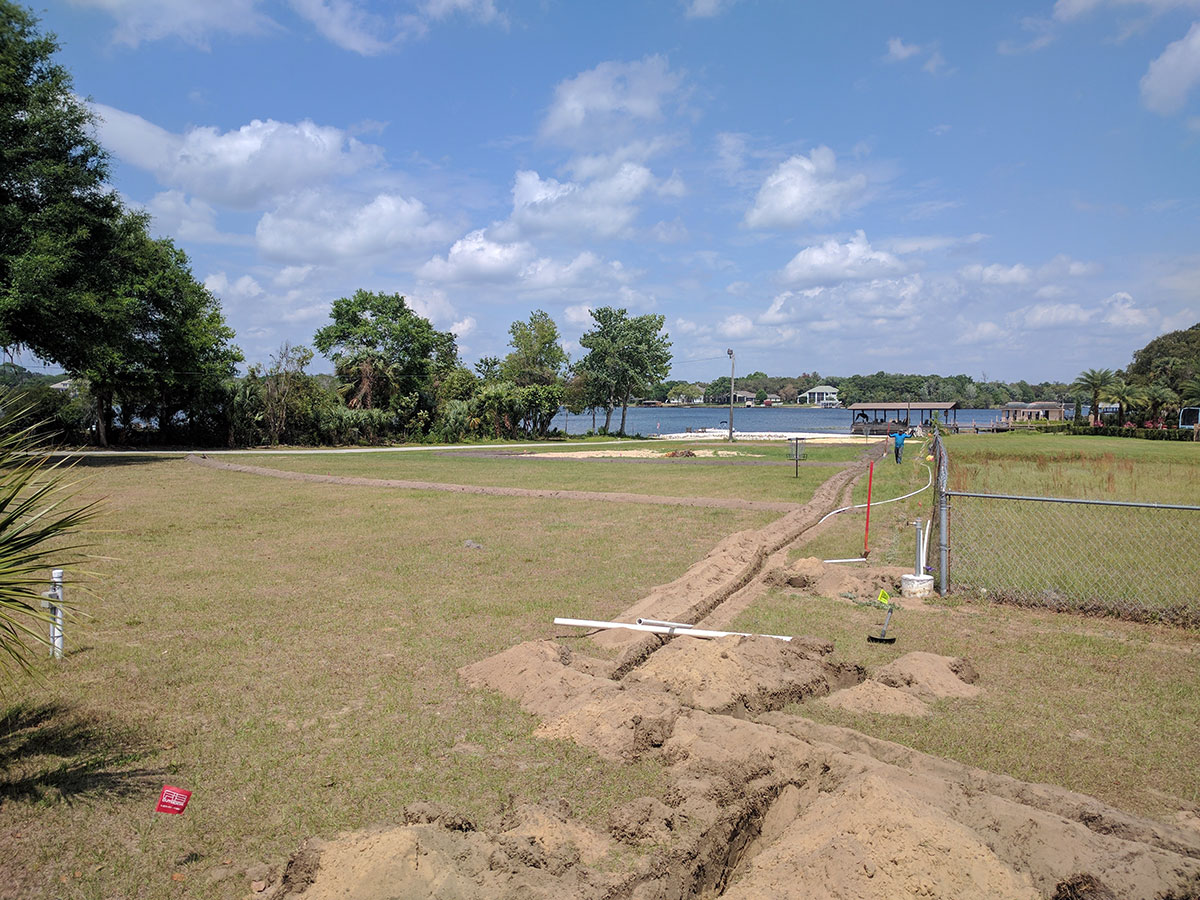
Irrigation installation Services
A professionally designed irrigation system is an investment in the long-term health, efficiency, and appearance of your landscape. For property owners throughout Lake Mary, Winter Park, Maitland, and surrounding Orlando Florida communities, Quality Services designs and installs irrigation systems tailored to each property’s soil conditions, drainage characteristics, landscape layout, and watering requirements.
Whether you’re installing irrigation for new construction, replacing an outdated system, or incorporating irrigation into a landscape renovation, every successful project begins with thoughtful planning and sound design. Backed by decades of experience, our team installs residential irrigation systems engineered to deliver dependable performance, efficient water distribution, and lasting value for your property.
Custom Irrigation System Design and Installation
A well-designed irrigation system begins with the property itself. Water pressure, soil, drainage, plantings, and landscape layout all influence how the system should be planned for efficient coverage and dependable long-term performance.
- Irrigation system design
- Pump installation
- Complete irrigation system installation
- Internet-enabled Wi-Fi controllers and systems
- Well installation
- Hunter Preferred Contractor
- Hunter Hydrawise Expert
- Rain Bird Select Contractor
Call Quality Services in Lake Mary, FL today! 407-314-9852
Professional Irrigation Installation and System Upgrades
Professional irrigation installation begins with understanding how the property will be supplied and how water should move through the system. Available pressure, municipal or well water, landscape layout, drainage, planting areas, and existing hardscape all influence system design, equipment selection, and zone placement.
Whether the project involves a new landscape, replacement of an aging system, or an upgrade to smart-controller technology, each installation is planned for efficient coverage and dependable performance. We also account for future landscape changes, practical expansion, controller programming, and final system testing so the completed system can serve the property effectively over time.
Planning an Irrigation Installation Project
Before installation begins, the project goals should be clear. The property owner and installer need to determine which areas require irrigation, how the landscape will be used, and whether future changes could affect the system layout. These early decisions help establish the scope of the installation and reduce the likelihood of avoidable changes once work is underway.
Planning should also confirm the water source, controller location, access to valves and equipment, and any site conditions that may affect installation. When irrigation is being added as part of a larger landscape installation, these decisions should be made before planting and final site work begin so each phase can proceed in the proper order.
Key planning decisions include:
- The areas and plantings the system must serve
- The intended water source
- The location of the controller and accessible equipment
- Known drainage concerns or site limitations
- Future landscape or property improvements
- The timing of irrigation work within the overall project
Designing Irrigation Zones for Efficient Water Coverage
Once the project scope is established, the property can be divided into irrigation zones based on how different areas need to be watered. A zone allows a group of compatible sprinklers or irrigation components to operate together without requiring the entire system to run at once.
Turf should generally be separated from planting beds because each requires a different method and duration of watering. Planting areas may be better served by dripline irrigation, while open lawn areas typically require sprinkler heads selected and positioned for broader coverage. Sunny areas may also need to be zoned separately from shaded sections where soil remains moist longer.
Zone design must account for available pressure and the amount of water each component uses. Connecting too many heads or combining incompatible equipment within one zone can weaken distribution and create uneven coverage. Proper spacing, matched precipitation rates, and controlled spray patterns help deliver water where it is needed while reducing overspray onto pavement, buildings, and neighboring areas.
An effective zoning plan considers:
- The watering needs of turf, shrubs, trees, and planting beds
- Differences between sunny, shaded, sloped, and low-lying areas
- Available water pressure and flow
- The operating requirements of sprinkler heads and drip components
- Head placement and spray direction near hardscapes and structures
- Practical options for adding future zones or expanding landscaped areas
Planning zones carefully during installation creates a system that distributes water more consistently and gives the property owner greater control over how each part of the landscape is irrigated.
Replacing an Older Irrigation System
An older irrigation system may continue operating while no longer matching the property it was designed to serve. Landscapes change, planting beds expand, trees mature, hardscapes are added, and original sprinkler layouts may no longer distribute water evenly. A complete replacement creates an opportunity to redesign the system around the property as it exists today.
Replacement installation can address aging pipes, valves, wiring, heads, and controls as one coordinated project rather than preserving an outdated layout. This allows zones to be reorganized, equipment to be selected for current water pressure and landscape needs, and spray patterns to be adjusted to reduce overspray and improve coverage.
A replacement plan may include:
- Redesigning zones around current turf and planting areas
- Updating sprinkler placement after landscape or hardscape changes
- Replacing aging underground lines, valves, wiring, and controls
- Separating areas with different watering requirements
- Installing modern controller technology
- Improving water distribution across the property
- Allowing for future landscape expansion
Planning a complete replacement should begin with a new property evaluation rather than assuming the original design should be duplicated. The scope, water source, equipment, and installation sequence can then be established as part of the overall sprinkler system installation plan.
Coordinating Irrigation Installation with Landscape Projects
Irrigation installation should be coordinated with the other work planned for the property rather than treated as an isolated phase. When a project includes a new landscape installation or a major renovation, irrigation lines, valves, heads, and controls should be positioned before planting, sod placement, and final grading are completed.
Drainage conditions also need to be considered before irrigation zones are finalized. Coordinating the system with the property’s landscape drainage plan helps avoid directing additional water toward low areas, structures, or locations where runoff already collects.
Hardscape work can affect both installation access and the permanent route of underground components. Driveways, patios, walkways, retaining features, and other hardscape installations should be accounted for before trenching begins so irrigation lines are not placed where future construction may damage or block them.
A coordinated installation sequence may include:
- Confirming final landscape and planting plans
- Reviewing grading and drainage requirements
- Locating future patios, walkways, driveways, and structures
- Installing underground irrigation components before planting and sod
- Positioning heads and drip zones around the completed landscape layout
- Testing the system before access areas are closed or finished
Planning the work in the proper order reduces unnecessary disturbance, protects completed improvements, and allows the irrigation system to support the finished landscape from the beginning.
Additional Information On Irrigation Installation Services:
Our irrigation installation services are designed around the unique soil conditions, drainage characteristics, and watering requirements commonly found throughout Lake Mary and surrounding Orlando-area communities. Proper system design helps improve coverage, reduce water waste, and support healthier long-term landscape growth.
Modern irrigation systems can incorporate smart controllers, weather-based scheduling, and zone-specific watering strategies to improve efficiency and system performance. These features help property owners better manage water usage while maintaining healthy lawns, planting beds, and landscape features.
Additional Information On Our Irrigation Services:
Our irrigation systems are built using proven components and installation practices appropriate for Lake Mary and surrounding Orlando-area communities. We install control systems, valves, piping, and emitters designed to support efficient water delivery and long-term system performance. When systems are not properly designed or installed, issues such as runoff, uneven coverage, and unnecessary water use can reduce efficiency and impact landscape health over time.
From new installations to system upgrades, our sprinkler and irrigation services focus on improving coverage accuracy, reducing water consumption, and supporting healthy landscapes through proper scheduling and system design. Proper system design and zoning help ensure water is delivered where it’s needed most, minimizing waste and supporting consistent plant health across different areas of the property.