Hardscapes
Hardscapes play a defining role in how outdoor spaces are structured, used, and experienced. For properties throughout Lake Mary, Winter Park, Maitland, and surrounding Orlando-area communities, well-planned hardscape installations provide the foundation for patios, walkways, retaining walls, and other functional outdoor features.
Unlike landscaping, which focuses on plant material, hardscaping establishes the layout, durability, and usability of the space. When designed correctly, these elements work together to support movement, manage water flow, and create long-term stability across the property.
Hardscape Design and Installation
Hardscape services focus on building durable, functional surfaces that define how outdoor areas are used. Features such as patios, walkways, paver surfaces, and retaining walls create stable, usable spaces while improving access and overall layout.
Our team installs hardscape elements that are planned to work together as a cohesive system, with attention to grading, material selection, and long-term performance. Each project is built to integrate with the surrounding property while maintaining structural stability over time.
Using proven installation methods and proper base preparation, we ensure that hardscape surfaces remain consistent, level, and reliable as they age.
Hardscaping Services Available:
- Structural retaining wall installation
- Courtyard wall construction
- Paver walkway installation
- Driveway paver installation and replacement
Call 407-314-9852 to discuss your hardscape project
What Hardscapes Are in Landscape Design
Hardscapes refer to the non-living structural elements within a landscape. These features define how outdoor spaces are organized, accessed, and used on a daily basis. Unlike planting and softscape elements, hardscapes provide the physical framework that supports movement, usability, and long-term stability across the property.
Common hardscape elements include patios, walkways, driveways, retaining walls, and courtyard surfaces. These components are designed to create defined outdoor areas while supporting proper grading, drainage flow, and structural integrity.
When properly planned and installed, hardscapes function as the foundation of the landscape, allowing other elements to perform correctly while maintaining consistency and durability over time.
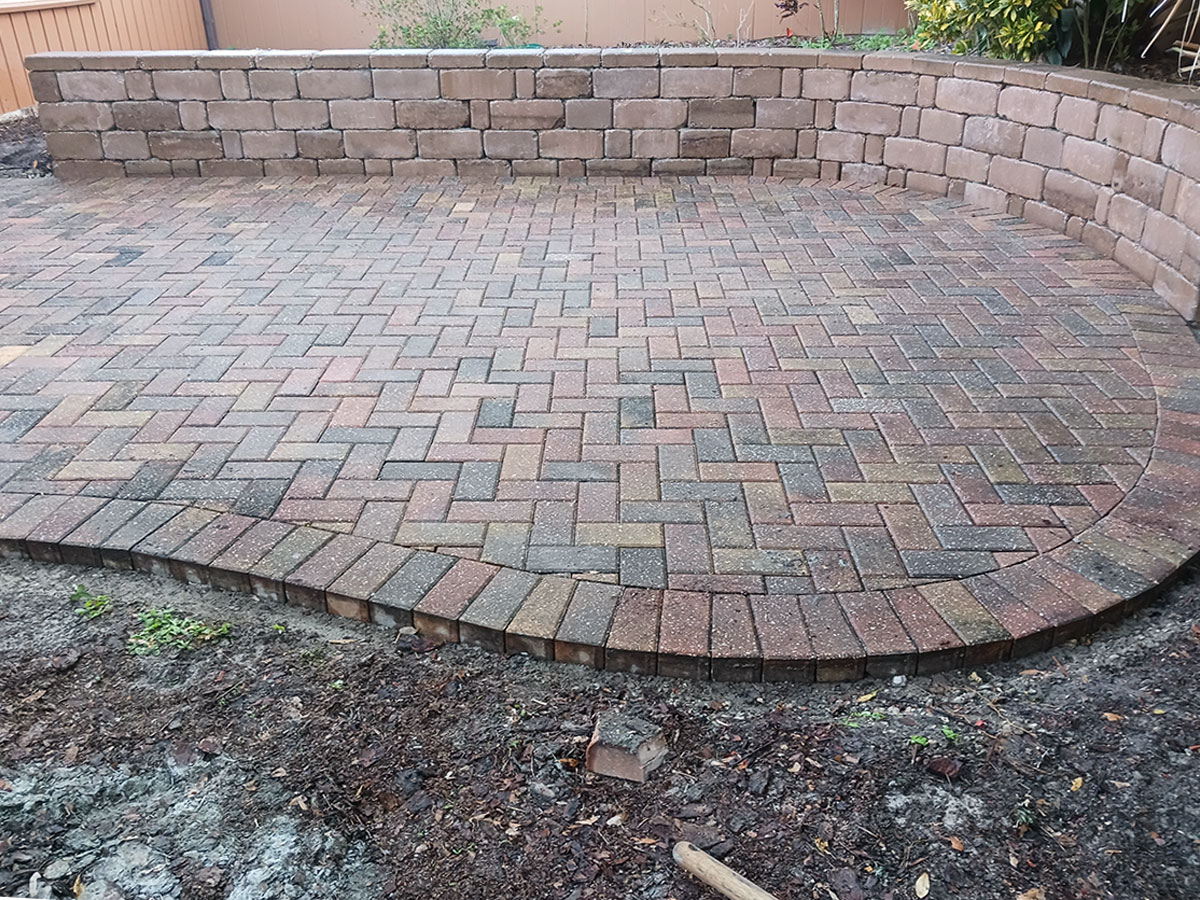
For example, Quality Services completed a Lake Mary retaining wall installation project that involved the construction of a freestanding retaining-style wall integrated into a paver courtyard system.
Common Hardscape Features for Residential Properties
Hardscape installations vary depending on how the outdoor space is intended to be used. Each feature serves a specific purpose in improving accessibility, defining space, and supporting overall property function.
Patios and paver surfaces are commonly used to create stable outdoor living areas for seating, dining, and general use. Walkways and pathways provide safe and consistent movement throughout the property while connecting different areas of the landscape.
Retaining walls and courtyard walls are used to manage elevation changes, support soil retention, and create defined structural boundaries. Learn more about how retaining walls are used in Orlando-area properties to stabilize and shape outdoor spaces.
Driveway paver systems offer a durable alternative to traditional surfaces while improving both appearance and long-term performance, as seen in this paver driveway installation project in Longwood.
Each of these elements must be designed and installed in relation to grading, drainage, and surrounding landscape conditions to ensure proper performance.
Hardscape Design Considerations for Long-Term Performance
Effective hardscape design requires more than selecting materials or choosing a layout. Proper planning involves understanding how each element interacts with the surrounding property, including grading, drainage patterns, and soil conditions.
Material selection plays a critical role in durability and appearance. Pavers, natural stone, and structural block systems must be chosen based on their ability to withstand use, weather exposure, and long-term settling.
Layout and spacing determine how the space will function over time, ensuring that surfaces remain usable, accessible, and visually consistent. Equally important is how water moves across and around these surfaces, as improper drainage can lead to shifting, erosion, and premature failure. In many cases, these issues are directly tied to underlying water management, which is why proper landscape drainage planning and correction is a critical part of long-term hardscape performance.
A well-designed hardscape system accounts for all of these factors from the beginning, reducing the likelihood of future issues and ensuring consistent performance.
Common Hardscape Problems and Installation Failures
Hardscape issues are often the result of improper base preparation, poor grading, or inadequate drainage planning. These problems may not be immediately visible but typically develop over time as surfaces begin to shift or settle.
Common issues include uneven or sunken pavers, pooling water on patio or driveway surfaces, and separation between joints or edges. Retaining walls may begin to lean or fail if they are not properly reinforced or if water pressure builds behind the structure. Many of these conditions are preventable with proper installation, as outlined in this breakdown of common paver failures seen in Orlando-area properties.
In many cases, these problems originate below the surface, where insufficient compaction or incorrect base materials lead to instability. Without proper installation methods, even high-quality materials can fail prematurely.
Addressing these conditions requires identifying the underlying cause and correcting the structural issues, not just the visible surface symptoms.
Choosing the Right Hardscape Approach for Your Property
Selecting the right hardscape solution depends on how the space will be used, the existing layout of the property, and the conditions that may affect long-term performance. Each project requires a balance between functionality, durability, and overall design.
Some properties require structural solutions such as retaining walls or grading adjustments, while others benefit from expanded usable space through patios, walkways, or driveway improvements. The correct approach ensures that all elements work together rather than being installed as isolated features.
A properly planned hardscape system considers both immediate use and long-term behavior, reducing the likelihood of future repairs while improving the overall usability of the space. For homeowners evaluating their options, understanding how to choose the right hardscape contractor can help ensure the project is planned and executed correctly from the start.
Understanding these factors before installation helps ensure that the final result performs consistently and integrates seamlessly with the surrounding landscape.
Hardscapes Frequently Asked Questions:
If you’re considering a hardscape project or dealing with shifting, drainage, or surface issues, a professional evaluation can help determine the right approach.